Top Tips For House Hunting Online

Blog-May-12-960x640.jpg

Top Tips for House Hunting Online

Hunting for a new home online a is a great place to start your search but keep in mind that you don’t see everything. Real estate agents are great at highlighting the features of a house listing online but to make the most of your time, keep these three things in mind:

Identify your Housing Needs

Preferences are important when house searching. A house may not have everything you want but it will have most of the things. Be realistic about pricing and keep in mind the must-have items that will definitely be needed because this will help narrow your search.

Stay up to Date

When you start your search, make sure you go to sites with up-to-date listings directly from the multiple listing service. Realtors post their most current homes for sale through this. Many sites fail to remove listings that are already off the market, and this can lead to you trying to sort through them and find the recent ones. Also note that Pre-foreclosure is not a property for sale so avoid website with properties not actually for sale.

Pictures can be Deceiving

Photographers capture listings at their best. They use different strategies and tools to boost the appeal of the home like creative editing and expensive camera equipment known for its effects. What they don’t show is unappealing parts, like an undone bathroom or small closet.

Go See The Listing After

After you have chosen a house that’s appealing to you, schedule a showing with your real estate agent. This is the opportunity to see every part of the house in person and see if it’s a good fit.

Searching online is a great way to learn more about the house you’re looking for. Even if you’re still unsure about moving, house hunting online gives potential sellers the basic information.

Fill out my Buyer Survey and I will be able to customize a search for you with up to date information.

Maximizing Your Home's Value

7-2.jpg

Maximizing Your Home Value

Are you ready to list your home for sale? One of the first questions you might have is, “how can I maximize my home value?” Every seller wants to get the best possible price for their home; fortunately there are ways to make sure your potential buyers see the true value of your property and allow you to receive top dollar when you sell.

  • Clean, declutter, depersonalize – The first thing every home seller needs to do is take a critical look at the home and clear out the distractions. Cleaning the home/yard is a must. Remove anything that can draw a buyer’s eye away from the beauty of the home.

  • Redecorate – Professional home stagers will often advise clients to remove and/or replace furnishings. Even if you love oversized furniture, it can make the room look small; consider renting more neutral pieces during the listing.

  • Perfect Condition – No home is perfect, but before you list take care of deferred maintenance issues. Replace missing roof tiles, repaint any area that is worn or dirty, and re-sod your lawn; remember; buyers want to know the home has “good bones.”

  • Update carefully – It’s not important for home sellers to have the latest countertops or custom bathtub to get a good value for their home. Often the home updates/improvements sellers undergo cost more than they would lose in sales price without them. If your home is very dated, consider a seller credit instead to allow the buyer to choose their own upgrades.

Homes retain value based on a few factors; the location, the condition and the features. Before you list, speak with your agent, then make any necessary repairs and changes to ensure you get the best value for your home when you sell.

Qualifying For a Loan- What Do I need?

5-2.jpg

Qualifying for a Loan – What do I need to qualify?

Before you start searching for your new home, the first step is to speak with a lender and determine your budget. This is being pre-qualified for a loan. Once you find the right home, then your lender will order an appraisal of the property and complete your financing. If this is your first home purchase, or if it’s been awhile since you’ve purchased, understanding how to prepare for the qualifying process is the first step to success.

What do I need to qualify for a home loan?

When preparing for your meeting with the lender gather all the pertinent documentation and bring them with you. Most lenders will want to see 2 months of employment pay stubs and bank records as well as the past 2 years of tax returns. After reviewing your income and savings, the lender will also order a credit report which shows all your recurring debt and payment history. This will be used to determine your ability to pay the proposed mortgage.

How does credit, down payment and income affect my ability to get a loan?

There are a variety of loan programs available. From 0% down VA loans to traditional 20% down loans, your lender will review all your options with you so you can determine the best program. Some government guaranteed loan programs, such as the VA or FHA, are more lenient with your credit score requirements as well as other qualifications, such as debt to income ratios.

Qualifying for a home loan might feel overwhelming, but your lender can walk you through the process and requirements. After learning your options, you can make the best financial decision for your new home loan.

Foreclosures- What is A Foreclosed Property?

Copy-of-BLOG-PHOTOS.jpg

Foreclosures – What is a Foreclosed Property?

Unfortunately since the mortgage meltdown, foreclosed properties have become more common. Many home buyers see this as an opportunity to find a great home for a bargain price. While foreclosures can offer some nice discounts, understanding how foreclosures work and how this affects the buyer is critical to ensure you are getting a good deal and not a disaster.

What is a Foreclosure?

First it’s important to understand what qualifies as a foreclosure. A foreclosure is a property which has been taken back by the lender in order to satisfy an unpaid mortgage debt. It is owned by the bank or lender and they have now listed the property for sale.

Can I save money buying a foreclosure?

Yes and no! It’s true that lenders do not want to hold onto their foreclosed properties longer than they need to, but they also understand the value of the home in its current condition.

While deeply distressed properties might be listed at very low prices, good homes in decent condition might not be listed below comparables in the same area.

Is the buying process different from a traditional sale?

The actual buying process is the same; you write an offer, obtain financing and close. The differences lay in the protections and opportunities for negotiation during the process. Most foreclosures are sold “as is” and the lender will not negotiate repairs of any kind. There could also be clauses which remove other contingencies, such as financing or appraisal. The buyer needs to read the agreement very carefully.

Buying a foreclosure can be a great way to find a nice property at a discounted price. Not all properties are a good deal however. Understanding the foreclosure market and reading the contracts very carefully is the key to buying a foreclosure – this way you get the most home for your money without buying a problem.

Ask me for more advice as to whether foreclosures should be part of your home search.

Home Improvements with High ROIs

Copy-of-BLOG-PHOTOS-2.jpg

Home Improvements with High ROI

Is your house a little dated? Do you want to make some improvements or upgrades but also want to make sure that you get the best bang for your buck if you decide to sell? Not all home improvements bring a good return on investment when selling, so unless the improvement is simply for your own style and enjoyment, choosing projects with higher ROI just make sense.

Home Improvements with High ROI

  • Add square footage – The best return on investment is adding space. Converting an attic or basement into a family room, adding a room or bathroom or even installing a garden room or outside kitchen will bring solid returns when selling.

  • Bathroom and Kitchens – Remodeling a bathroom or kitchen will always bring more than their cost when selling. Create simple and soothing environments where a future owner can imagine themselves. Avoid heavy period-style cabinetry and surfaces.

  • Doors and Windows – Upgraded doors and windows can really add impact to a room. Not only do current options save energy, they come in a wide variety of styles and finishes to accentuate the space.

  • Garage Doors – If you have an old or weathered garage door, this is a relatively inexpensive way to dress up your home.

  • Paint – Fresh paint is inexpensive and makes the home appear new and modern. Choose calm tones which compliment any décor.

Regardless of whether you’re considering a weekend project or a major remodel, understanding the return on your investment can help you make the best choice for your project. Home improvements can be costly and if you’re considering listing your home for sale in the future, make sure you can recapture your cost.

Seek A Consultation with me prior to doing any major renovations for selling your home,

Negotiating for Top Dollar

Copy-of-BLOG-PHOTOS-1.jpg

Negotiating for Top Dollar

Selling your home? Every seller wants to make sure they sell their home for the best possible sales price. Getting top dollar for your home is not as complicated as you might think. By using a simple negotiation strategy, you can make sure receive the best price for your home listing.

The first step in a negotiation strategy begins before you even list your home. Choosing the right real estate agent and listening to their advice regarding home value is important. Choose a realistic list price; over-pricing to “test the market” is not only a waste of time, but as the listing ages on the market, buyers are more likely to write lowball offers.

Once you receive an offer; review and respond to all reasonable offers. Never assume that a buyer isn’t serious just because the offer is lower than you’re willing to accept. Make a reasonable counter offer; if you are motivated to lower your price, you can, but if not, countering with a full price number is acceptable also. Just make sure your price is fair for the actual value of the home.

Consider compromising on terms. Often you can negotiate a higher sales price if you are flexible on other terms. Does the buyer need extra time to close/move? Would they like to have the garage shelves or patio furniture? Win-win situations do not have to involve compromising on price.

All negotiations are different, but by setting the proper stage and calmly navigating through offers, you can make sure you sell your home for the best possible sales price. Getting top dollar for your home is a simple strategy of fair pricing and unemotional negotiations.

Tips to Save For A Downpayment

Blog-July-6.jpg

Tips to Save for a Down payment

Are you thinking about buying a new home? Gone are the days of 100% financing with zero down payment. So if you are not sitting on a pile of cash, the idea of finding the money to pay the down payment might feel daunting. But there are simple ways to raise the cash needed to get into a new home.

  • Assess Your Current Assets - The first step is to determine what cash you might have available right now. Do you have a savings account or perhaps a 401k*? Are you nursing a pet project, like a vintage car or motorcycle, which could be sold for additional cash?

  • Explore Loan Options - Not all home loans require the typical 20% down payment. FHA and VA loans are available for qualified buyers which allow a very low/no down payment.

  • Ask For Help - Some loans allow you to use gift funds from relatives for the down payment. There are also local and state programs which offer down payment assistance and second loans.

  • Employment Incentives – Some cities and counties offer help with buying a home for teachers and first responders. If you fall into one of these categories, speak with your lender about options for down payment assistance.

  • Government Programs- If you qualify, there are grants at the county level in our area which can be applied to your purchase of a home. There are many restrictions so reach out and we can discuss if you would be a suitable candidate!

Buying a new home is a great way to add to your financial security. Building equity with a property is one way to build wealth while providing for you and your family. Finding the down payment might be easier than you think. If you are ready to explore home ownership, meet with a lender and discuss your unique situation.

Ask for my Home Buyer’s Guide which offers local lenders recommended by previous clients

Should Sellers Offer A Home Warranty?

Should Sellers Offer Home Warranties?

If you are selling your home, one of the most common requests with the buyer’s offer is to pay for a home warranty. As a seller, you might be wondering if it’s something that’s worth the expense. Some agents suggest that the seller purchase a listing warranty as well as part of the sales process. Understanding the benefits of a home warranty is the first step in deciding if it’s worth the cost to you, the seller.

A home warranty is a policy which covers the cost of repairs to a number of critical systems in the home. While coverage varies, most cover electrical, plumbing, heating, air conditioning and appliances. Some optional coverage could include pool and spa, roofing and code protection among others. In the event that a home buyer has a problem with any of the covered systems, the warranty would send a service person out to make the repairs for only the policy deductible – usually between $65-100 per problem.

The home warranty provides peace-of-mind to the buyer that if an undetected problem shows up after the close; their out-of-pocket cost is limited to the small deductible. While this does not negate the need for a professional home inspection, it can push a transaction to close with buyers who are nervous about unexpected problems. As an additional bonus, most warranty companies offer a free listing warranty which covers unexpected issues during the listing; often saving the home owner hundreds of dollars in repairs arising from the inspection.

Offering a home warranty in the listing is one way to demonstrate to potential buyers that the condition of the home is important to the seller as well. You take maintenance seriously and they can rest assured that they are making a good investment.

Is Flipping Houses Right For You?

Is Flipping Houses for You?

There are a wide variety of ways to invest in real estate; To be successful in real estate investing, it’s critical that you identify what skills you have and your tolerance for risk. Flipping homes is one of these ways, but not every investor is prepared for what house flipping involves. Understanding the model can help you determine if this is the right investment strategy for you.

Investors can make great profits by flipping properties. First question is what kind of income are you seeking, active or passive? Actively buying, fixing and flipping properties is quick cash that requires careful timing and effort. Rental properties on the other hand offer passive long-term income which accumulates over time.

The second consideration is risk. Flipping is really speculation. When buying a flipper, one must gauge the cost of refurbishment, remodeling and the cost of the holding time into the price valuation, then carefully market the home and realize the profit. Any number of variances can occur which could cause the value to drop and profits to reduce or even disappear, such as a delay in remodeling or a slow real estate market. Having ready cash to cover the unexpected is critical to success.

Flipping houses is one way to invest in real estate. For those who are able to plan for the unexpected, this quick turn-around model might be a great tool for wealth building.

Understanding your market, resources and risk tolerance is the first step in deciding if flipping is right for you.

Call to discuss further whether you should become a house flipper.

Latest Backsplash Kitchen Trends

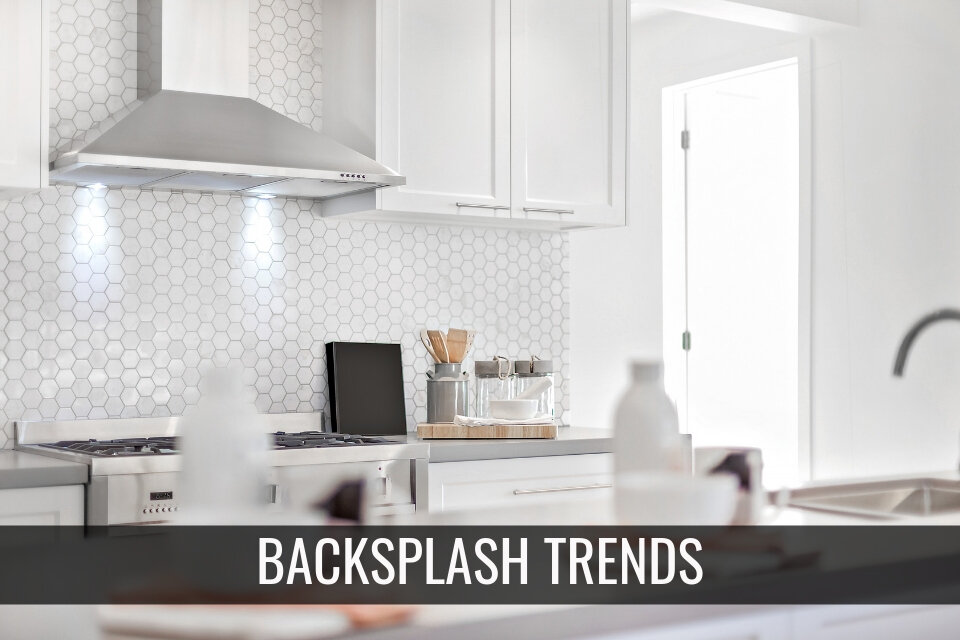
Latest Kitchen Backsplash Trends

This year, kitchen design shows are filled with new materials, patterns and colors as enthusiasts look for the latest trends and styles.

As we leave the dark granite countertops behind, kitchens are getting lighter, brighter and more streamlined looks. These new backsplashes are design statement pieces in their own right, creating a uniquely modern feel to the space. With a focus on sleek surfaces and natural elements, here are the latest trends for kitchen backsplashes.

  • Mixed materials – layers of stone mix with sleek metal trims or soft wood to create layer upon layer of design.

  • Higher Profiles – the backsplash is no longer a 6” continuation of the countertop. Taller profiles and accent-wall styling are new trends.

  • Bold Patterns – geometric tone-on-tone designs create visual interest.

  • Subway Tiles – after so many of us removed the old white tile of our kitchens, designers are bringing them back in interesting shapes and patterns.

  • Veins – larger granite, quartz or natural stone pieces are used as focal points, adding drama and depth.

  • Backsplash Shelves – one of the latest design trends is to create a ledge or shelf along the top of a high-profile backsplash.

  • Solid Wall – this last trend is eliminating a backsplash entirely and adding a stone “wall” in the kitchen, removing any visual distinction and creating a sleek, clean line.

2020 design trends are contemporary and exciting. After years of cozy kitchens and dark woods, these kitchens are light and bright; mixing soft natural stone and wood with hard, urban features for a modern, functional kitchen that suits any home style.